

7 Industrial Adhesive Bonding Techniques for Powder Coated Metal
Quick Summary
The best industrial adhesive bonding techniques for powder coated metal include double-sided acrylic foam tape, structural acrylic adhesive, two-part epoxy and polyurethane adhesive. Thorough surface cleaning matters as much as the adhesive chosen, because powder coated finishes resist adhesion.
- Powder coating is baked on and low in surface energy, so adhesives struggle to wet out and grip it.
- Skipping surface cleaning is the most common cause of failed bonds on coated metal.
- Acrylic foam tape reaches about 90% bond strength after 24 hours, with full strength at 48-72 hours.
- Test a sample bond on a spare panel under the same conditions before committing to a full job.
Table of Contents
- Why Powder Coated Metal Is Harder to Bond Than It Looks
- Comparison Table: The 7 Bonding Techniques at a Glance
- The 7 Techniques, With Pros and Cons for Each
- Surface Preparation for Metal Bonding on Powder Coated Surfaces
- Curing Times and Testing Bond Strength Before You Commit
- Choosing the Right Technique and Ordering Your Tape Today
- Frequently Asked Questions
Why Powder Coated Metal Is Harder to Bond Than It Looks
Powder coated metal looks smooth and uniform, but its surface is often the reason adhesive fails. The coating is designed to resist adhesion, so a bond that holds on bare steel may not hold on a finished panel. Understanding this is the first step to choosing the right tape or adhesive.
Powder coating is a dry finish that is baked onto the metal. The cured surface is smooth and low in energy, which helps it resist moisture and wear. Those same properties make it difficult for adhesives to wet out and grip. Many people assume that a strong tape will solve the problem, but the surface prep and the adhesive chemistry matter just as much.
Three factors decide whether a bond lasts:
- Surface energy: Low-energy coatings repel many adhesives, so the adhesive needs to be designed for them.
- Contamination: Oils from handling, release agents and dust sit on the surface and block contact.
- Load and environment: Vibration, heat cycling and outdoor exposure stress the joint over time.
Watch out: skipping cleaning is the most common cause of failed bonds on coated metal. Even a fresh-from-the-box panel carries fingerprints and manufacturing residue.
Comparison Table: The 7 Bonding Techniques at a Glance
The table below summarises the seven techniques covered in this guide. Use it to shortlist options before reading the detailed sections.
| Technique | Best Use | Cure Time | Load Handling | Removability |
|---|---|---|---|---|
| Double-sided acrylic foam tape (VHB-type) | Panels, trims, signage | Full strength in 48-72 hours | Good, for static and vibration loads | Low |
| Structural acrylic adhesive | Structural joints | Hours to 24 hours | High | Very low |
| Two-part epoxy | Heavy-duty, gap-filling bonds | Hours to days | Very high | Very low |
| Cyanoacrylate (instant adhesive) | Small, precise parts | Seconds to minutes | Moderate, brittle under impact | Low |
| Polyurethane adhesive | Flexible joints, outdoor use | Days | Good | Low |
| Silicone-based sealants | Sealing and flexible gaps | 24 hours or more | Low to moderate | Moderate |
| Hot melt adhesive | Fast assembly, lightweight parts | Minutes | Low to moderate | Low |
The 7 Techniques, With Pros and Cons for Each
1. Double-sided acrylic foam tape (VHB-type)
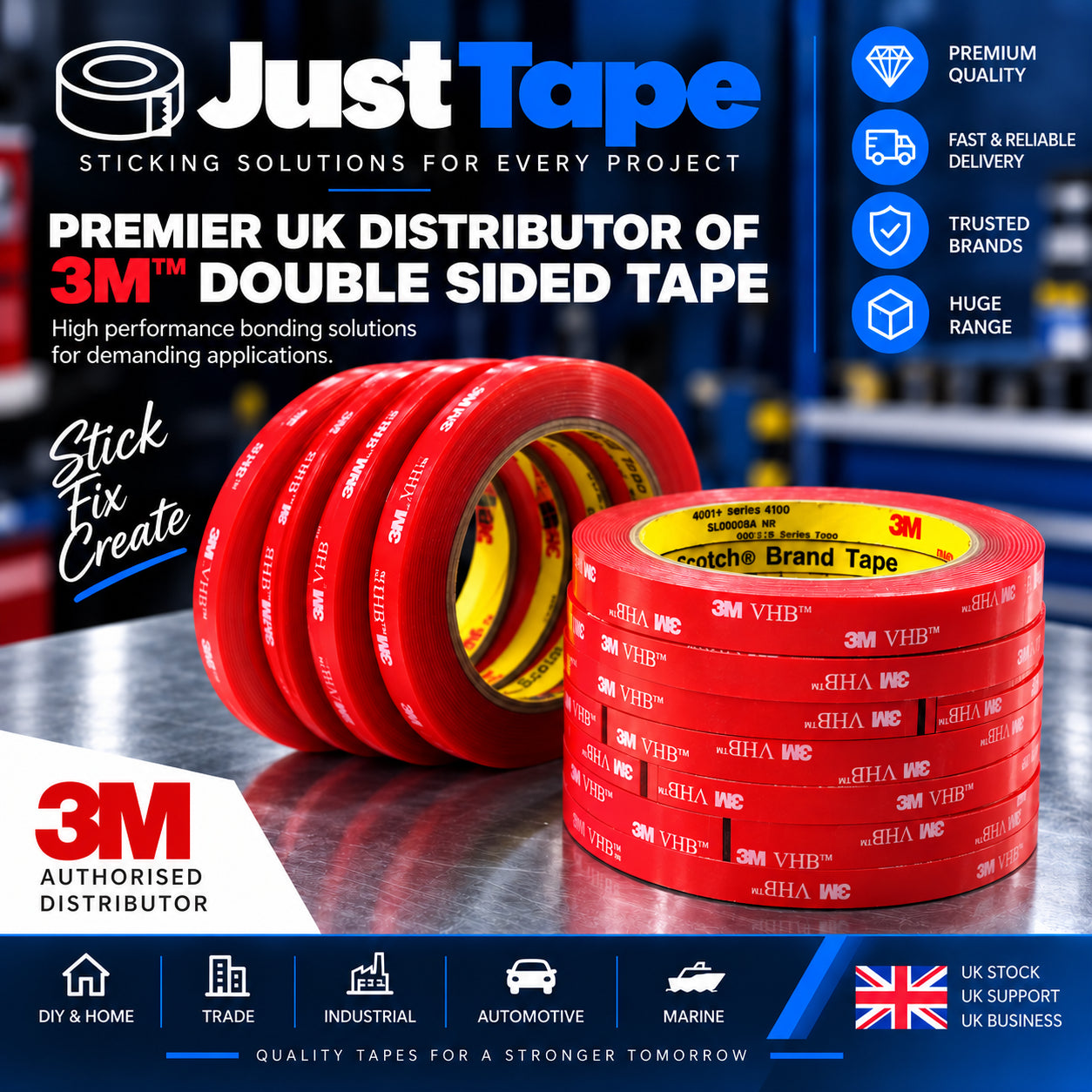
This is the most practical option for many powder coated jobs. The foam core spreads stress across the bond and absorbs vibration. Our 3M VHB double sided self adhesive tape rolls, available in grey or clear, are simple to apply: peel the liner, cut to length with scissors and press firmly. According to the product listing, about 50% bond strength is reached after 20-30 minutes, 90% after 24 hours, and full strength is advised after 48-72 hours.
Pros: Easy to apply, handles vibration well, no mixing or curing equipment needed. Cons: Requires good surface prep, and removal usually damages the tape.
2. Structural acrylic adhesive
Structural acrylics suit heavier loads where a tape may not be enough. They bond well to coated metal when the surface is properly prepared and often need less surface abrasion than epoxies.
Pros: High strength, good impact resistance. Cons: Stronger odour and handling requirements, and cost is higher than tape.
3. Two-part epoxy
Epoxy offers very high strength and fills gaps well. It is a good choice for heavy brackets or repair work on coated frames.
Pros: Excellent load capacity and chemical resistance. Cons: Requires accurate mixing, a longer working time and clamping during cure.
4. Cyanoacrylate (instant adhesive)
Cyanoacrylate bonds in seconds and suits small, precise parts. It is less reliable on large coated panels, where it can be brittle under impact.
Pros: Very fast, minimal equipment. Cons: Brittle, poor gap filling, weak on flexible joints.
5. Polyurethane adhesive
Polyurethane stays flexible and copes well with movement and outdoor conditions. It is a reasonable option where thermal expansion is a concern.
Pros: Flexible, durable outdoors. Cons: Slow cure and can be messy to apply.
6. Silicone-based sealants
Silicone sealants are best for sealing and flexible gaps rather than structural bonding. They are useful for weatherproofing a coated panel edge.
Pros: Flexible, weather resistant, easy to reposition briefly. Cons: Low structural strength, and adhesion to some coatings needs testing.
7. Hot melt adhesive
Hot melt bonds quickly once applied, which suits assembly lines and lightweight parts. It softens with heat, so it is not ideal for high-temperature environments.
Pros: Very fast set time, no solvents. Cons: Heat sensitive and lower strength than structural options.
Surface Preparation for Metal Bonding on Powder Coated Surfaces
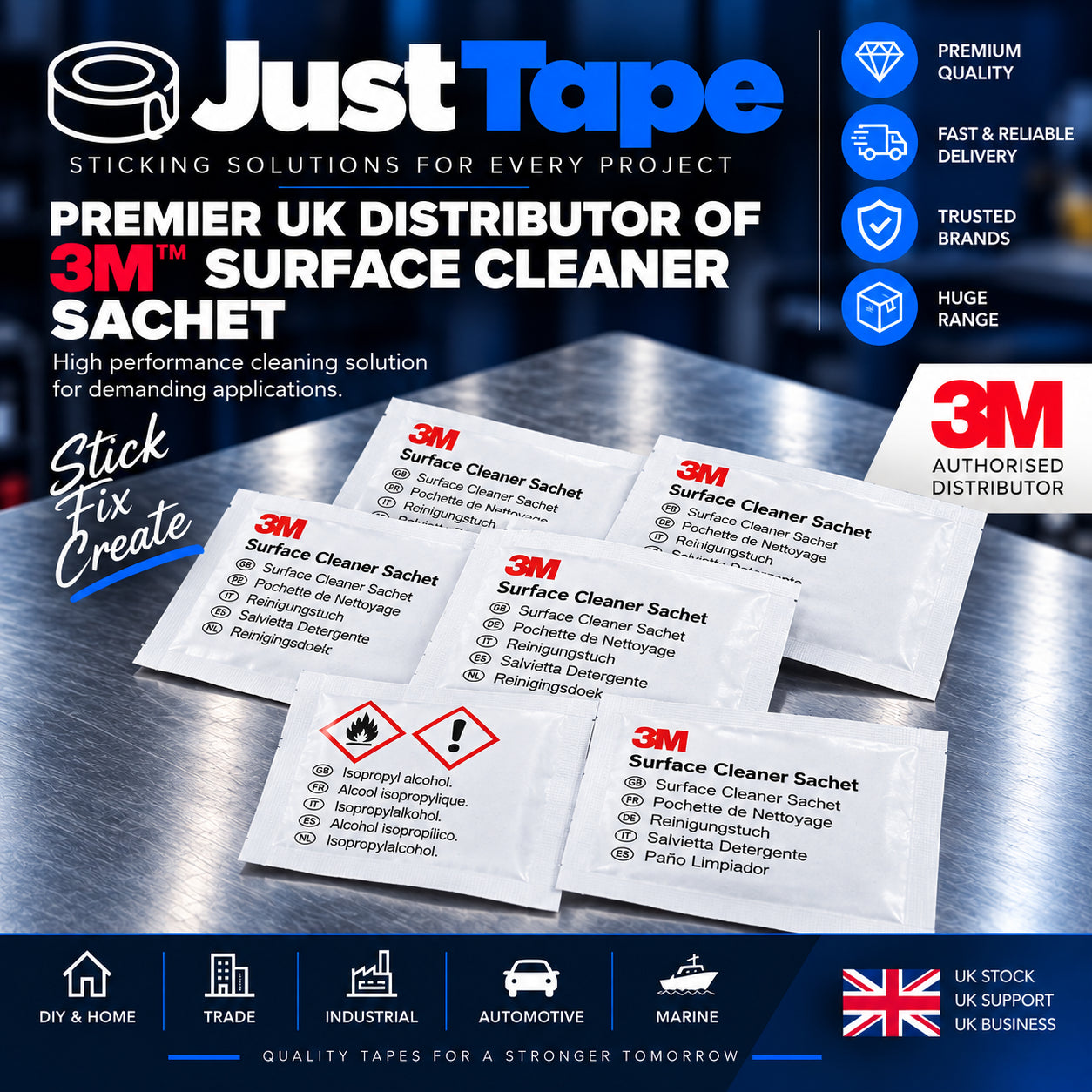
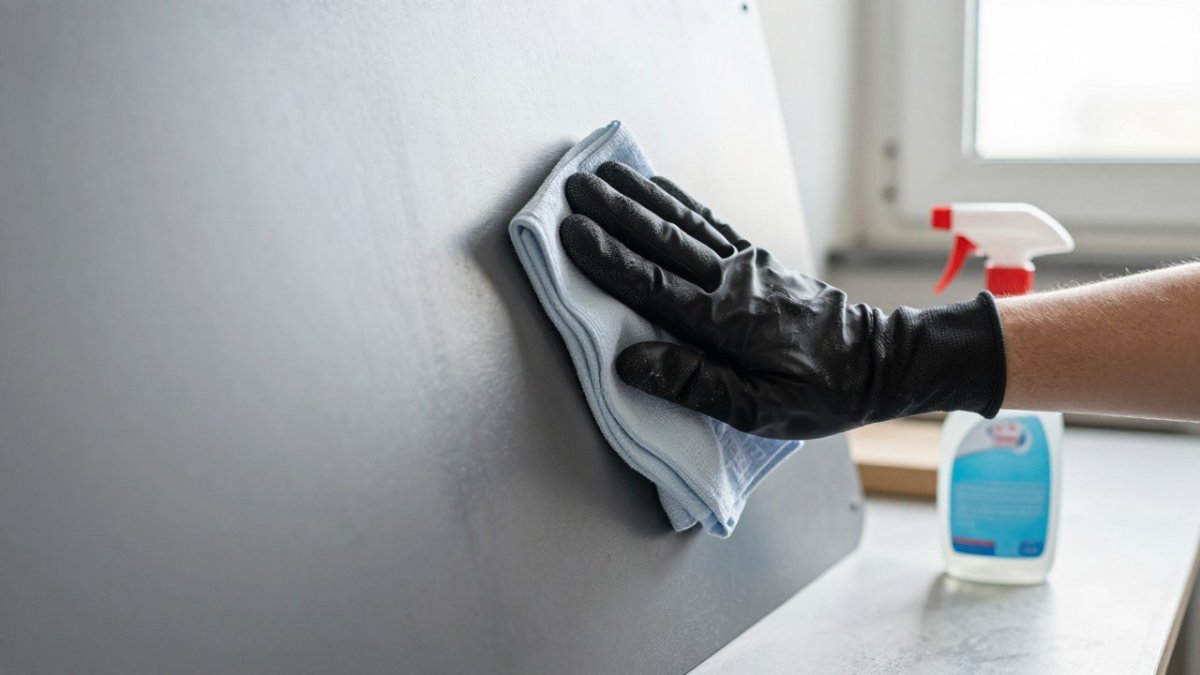
Good preparation makes more difference than the choice of adhesive. Clean the surface with a suitable solvent to remove oils and residue. If old adhesive is still on the metal, learn how to remove adhesive residue from metal before you start. The 3M Surface Cleaner Sachet is made for this purpose. It is a solution of isopropyl alcohol in water that evaporates quickly and leaves no residue.
Work through these steps: see how to apply structural bonding tape step by step if you are using tape rather than liquid adhesive.
- Wipe the surface with the cleaner using a clean, lint-free cloth.
- Let it evaporate fully before touching the area again.
- Lightly abrade glossy coatings with a fine abrasive pad if the adhesive manufacturer recommends it.
- Apply the adhesive or tape within the open time, without touching the bonding face.
Many people choose to use the cleaner on a test area first to check the finish is not affected.
Curing Times and Testing Bond Strength Before You Commit
Most adhesives reach full strength gradually. Acrylic foam tape reaches about 90% after 24 hours, and the listing recommends allowing 48-72 hours for full strength.
Before committing to a full job, test a sample bond on a spare panel. Apply the adhesive under the same conditions, wait for the full cure, then try to peel or shear the joint by hand. If the bond fails cleanly at the adhesive-to-metal interface, revisit your surface prep or choose a different technique.
Choosing the Right Technique and Ordering Your Tape Today
Start by asking three questions: how heavy is the load, will the joint move or vibrate, and do you need to remove the part later? If the joint is static and light to medium weight, double-sided acrylic foam tape is usually the quickest route. Choose a permanent bond only when you are sure the part will not need to come off.
Our 3M VHB double sided tape rolls are available in grey or clear, and the 3M Double Sided Sticky Pads come in grey or clear too, for smaller fixings. The 3M Surface Cleaner Sachet is available for preparing surfaces before bonding. Order online from Just Tape today.
Frequently Asked Questions
What is the best adhesive for bonding powder-coated metal?
For most powder-coated metal, a high-performance acrylic foam tape such as 3M VHB is a strong starting point, because its viscoelastic foam spreads stress across the bond and tolerates the slightly uneven finish of powder coating. Always clean the surface with 3M VHB Surface Cleaner or isopropyl alcohol first, and test on an offcut before committing to a full run.
Can you bond metal without removing the powder coating?
Yes, in most cases you can bond directly over a sound powder coat, provided the coating is fully cured, firmly adhered and free of flaking or contamination. The adhesive is bonding to the coating, not the bare metal, so bond strength depends on how well the coating itself is attached to the substrate. If the coating lifts when scratched or tested with a cross-hatch, remove it locally by abrading back to bare metal before bonding.
How do you prepare powder-coated metal for adhesive bonding?
Start by degreasing the surface with isopropyl alcohol or a dedicated cleaner. Wipe away all dust and allow the surface to dry fully. Avoid touching the bond area with bare fingers, since skin oils reduce adhesion. The 3M Surface Cleaner Sachet, which is an isopropyl alcohol and water solution that evaporates without residue, is suited to this step.
How long does industrial adhesive take to cure on metal?
Cure times vary by chemistry. At room temperature, 3M VHB acrylic tape reaches roughly 50% of its bond strength after 20 to 30 minutes, around 90% after 24 hours, and full strength after 48 to 72 hours. Check the manufacturer's data sheet for your specific product and avoid loading the joint until the recommended time has passed.
