

How to Remove Adhesive Residue from Metal
Table of Contents
- Why Adhesive Residue Removal Matters on Metal Surfaces
- What You'll Need Before Starting
- Best Adhesive Remover Methods for Metal
- How to Remove Adhesive from Stainless Steel
- How to Remove Adhesive from Painted Metal
- How to Remove Old Glue from Metal Surfaces
- Common Mistakes to Avoid
- Frequently Asked Questions
Last Updated: October 11, 2026
Why Adhesive Residue Removal Matters on Metal Surfaces
Learning how to remove adhesive residue from metal is one of those tasks that seems simple until you actually try it. You peel off a sticker or tape, and suddenly you're left with a sticky, stubborn mess that won't budge. The problem gets worse when the adhesive hardens over time or sits in direct sunlight. Metal surfaces, whether stainless steel, painted metal, or aluminium, require careful handling because aggressive scrubbing can scratch, dent, or damage the finish you're trying to protect.
At Just Tape, we work with customers every day who face this exact challenge. They need to remove adhesive residue without leaving marks, scratches, or a worse mess than they started with. The good news is that how to remove adhesive residue from metal doesn't have to be complicated. The method you choose depends on three things: the type of metal, what the adhesive is bonded to, and how much time you have.
Getting this right matters because the wrong approach can cost you money. Damaged metal surfaces need refinishing, repainting, or replacement. Starting with the correct technique saves time, protects your surface, and gives you a clean result the first time.
What You'll Need Before Starting
Before you tackle adhesive residue, gather the right tools. Having everything ready means you won't waste time searching mid-job, and you'll be less tempted to use the wrong tool out of frustration.
Essential supplies for adhesive removal include:
- Heat source (heat gun, hairdryer, or warm water)
- Soft cloths or microfibre towels
- Plastic or rubber scrapers (never metal on metal)
- Isopropyl alcohol or white vinegar
- Gloves to protect your hands
- Safety glasses if using solvents
- Small brush for detailed work
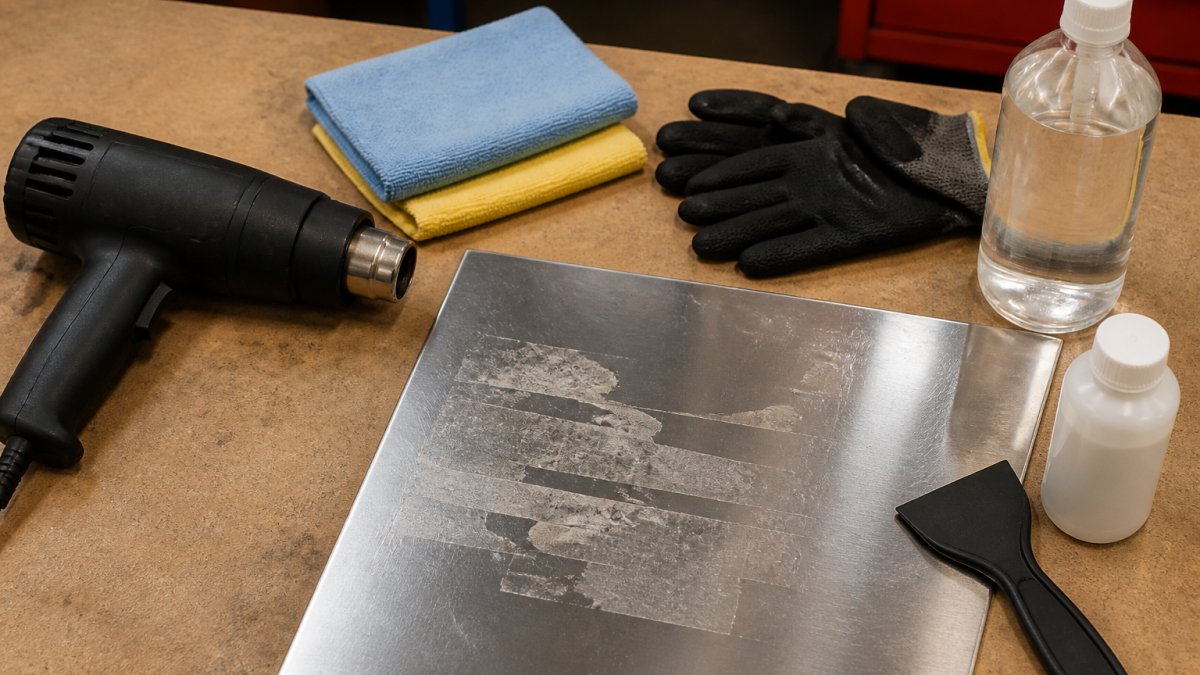
The quality of your tools matters. Cheap plastic scrapers break and leave fragments behind. Soft cloths prevent scratching better than paper towels. Proper gloves protect your skin from solvents and rough surfaces.
Best Adhesive Remover Methods for Metal
The most effective approach depends on the adhesive type and metal surface. Different methods work better for different situations. Start with the gentlest option and work your way up if needed.
Heat-based removal techniques
Heat is often the first choice because it's safe, non-toxic, and effective on most adhesives. Heating softens the adhesive bond, making it easier to peel away without leaving residue behind.
How to use heat for adhesive removal:
- Set your heat gun to medium temperature (not maximum, you don't want to damage the metal or paint)
- Hold it 10-15 cm away from the adhesive residue
- Apply heat for 30-60 seconds, moving the gun in small circles
- Let the surface cool slightly so you can touch it safely
- Gently peel or roll the adhesive away with your fingers or a soft cloth
- Repeat if necessary for stubborn spots
A hairdryer works for light residue but takes longer. Warm water applied with a cloth helps on some adhesives, especially those used on outdoor tape. The advantage of heat is that it requires no chemicals and won't damage most metal finishes. The limitation is that some industrial adhesives don't soften enough with heat alone.
Solvent and chemical approaches
Solvents dissolve adhesive bonds chemically rather than softening them with heat. This method works well on residue that won't budge with heat alone.
Common solvents for metal surfaces:
- Isopropyl alcohol, effective on most adhesives, evaporates quickly, safe on most finishes
- White vinegar, gentle, non-toxic, works on lighter adhesives
- Acetone, powerful but can damage some paint finishes (test first)
- Specialist adhesive removers, formulated for stubborn industrial adhesives
Apply your chosen solvent by soaking a cloth and holding it against the residue for 2-3 minutes. This gives the solvent time to penetrate and break down the adhesive bond. Then gently rub the softened residue away with the cloth. For thick or old adhesive, repeat the process 2-3 times.
Isopropyl alcohol is the safest choice for most home and workshop jobs because it won't damage paint or metal finishes. It evaporates completely, leaving no oily residue behind. Customers often ask about solvent safety, and the answer is straightforward: start with alcohol or vinegar, and only move to stronger solvents if those don't work.
Mechanical removal without scratching
Sometimes you need to physically remove adhesive residue, but you must do it carefully to avoid scratching metal. The key is using the right tool and the right technique.
Best practices for mechanical removal:
- Use plastic or rubber scrapers, never metal scrapers on metal surfaces
- Scrape at a shallow angle (20-30 degrees) rather than perpendicular to the surface
- Apply steady, gentle pressure, let the tool do the work rather than forcing it
- Move in one direction rather than scrubbing back and forth
- Test your scraper on a hidden area first to check for scratching
Soft-bristled brushes work well for textured metal surfaces where a scraper might catch. For delicate finishes, a cloth wrapped around a plastic scraper provides extra protection. Mechanical removal takes patience, but it works when chemical methods fall short.
How to Remove Adhesive from Stainless Steel
Stainless steel is durable but prone to water spots and streaking if not dried properly. When removing adhesive residue from stainless steel, your goal is to restore the surface without leaving marks.
The best method for stainless steel combines heat and isopropyl alcohol. Apply heat first to soften the adhesive, then wipe with alcohol-soaked cloth to dissolve any remaining residue. Finish by drying thoroughly with a soft, lint-free cloth to prevent water spots. Stainless steel shows every fingerprint and water mark, so dry immediately after cleaning.
Avoid acetone and harsh solvents on stainless steel, as they can leave dull patches or streaks. Mechanical scraping should be a last resort because even plastic scrapers can leave fine marks on polished stainless steel. If you must scrape, use a soft plastic scraper and work with the grain of the steel if visible.
For industrial applications where stainless steel cable trays or equipment have adhesive residue, the same principle applies: gentle heat and mild solvent first, mechanical removal only if necessary. The stakes are higher in data centres and manufacturing environments, so preventing damage is critical.
How to Remove Adhesive from Painted Metal
Painted metal requires extra caution because the adhesive removal process can damage the paint finish. Your approach must protect the paint while removing the residue.
Start with heat on low to medium setting. Test on a small area first to ensure the paint doesn't bubble or discolour. If heat works, use it exclusively, no solvents needed. If heat alone doesn't work, try white vinegar before moving to isopropyl alcohol. Vinegar is gentler on paint than alcohol, though both usually work safely.
Never use acetone or aggressive solvents on painted metal unless you're prepared to repaint the area. Many industrial paints can be damaged by strong solvents, leaving dull spots or colour changes. If mechanical removal is necessary, use only the softest plastic scraper available and work at a very shallow angle.
Common painted metal surfaces include machinery, equipment frames, and outdoor structures. These often have adhesive residue from labels, cable management tape, or temporary identification markers. The paint finish is usually there for protection, so preserving it is part of the job.
How to Remove Old Glue from Metal Surfaces
Old adhesive that's been sitting for months or years becomes harder and more stubborn. The bond strengthens over time, especially if exposed to heat or sunlight. Removing old glue from metal requires patience and the right combination of methods.
Start with extended heat application. Give the adhesive 2-3 minutes of gentle heat rather than 30-60 seconds. This longer duration penetrates deeper and softens the adhesive more thoroughly. After heating, let it cool just enough to touch safely, then peel gently.
If heat doesn't work, apply a solvent and let it soak for 5-10 minutes. Old adhesive needs more time for the solvent to penetrate. You may need to repeat the soak-and-wipe cycle 3-4 times before the residue releases completely.
For very old or industrial adhesive that resists both heat and solvents, specialist adhesive removers designed for the specific adhesive type may be necessary. These formulations are stronger than household solvents but still safer than aggressive mechanical removal. Our sourcing service can help you find the right product for your specific situation.
Common Mistakes to Avoid
Most people make predictable errors when removing adhesive residue. Knowing what to avoid saves time and prevents damage.
Using metal scrapers on metal surfaces. This is the biggest mistake. Metal-on-metal contact scratches and gouges the surface you're trying to clean. Always use plastic or rubber scrapers instead.
Applying maximum heat immediately. Impatience leads to heat damage on painted surfaces. Start low and increase gradually. Test on a hidden area first.
Scrubbing aggressively instead of working patiently. Aggressive scrubbing scratches surfaces and doesn't remove adhesive faster. Gentle, steady pressure with the right tool works better.
Using the wrong solvent for the job. Acetone damages some paint finishes. Vinegar alone won't dissolve heavy industrial adhesive. Match your solvent to the adhesive type and surface finish.
Skipping the drying step. Water spots and streaks appear on metal surfaces left wet. Always dry thoroughly with a soft cloth after using solvents.
Trying only one method and giving up. Combining methods, heat plus solvent plus gentle scraping, works better than relying on one approach alone.
Removing adhesive residue from metal doesn't require expensive equipment or professional help. The right technique, the right tools, and a bit of patience solve the problem cleanly. Start with the gentlest method and escalate only if needed. Heat works for fresh adhesive.
Our team can advise on the best approach for your specific surface and adhesive type.
Frequently Asked Questions
What is the safest way to remove adhesive residue from metal without causing damage?
Start with the gentlest method first: apply heat with a heat gun for 30-60 seconds to soften the adhesive, then roll it away with your thumb or a soft cloth. If that doesn't work, try rubbing alcohol on a cloth, rubbing gently in circular motions. For stubborn residue, white vinegar or specialist adhesive removers work well. Always test on an inconspicuous area first, especially on painted or polished finishes. Avoid abrasive scrubbing, which can scratch the metal surface.
Can you use white vinegar to remove adhesive residue from metal?
Yes, white vinegar is effective on many types of adhesive residue. Soak a cloth in white vinegar and apply it to the residue for 10-15 minutes to soften it, then gently rub it away. This method works best on light to moderate residue and is safer than harsh chemicals. It's particularly useful for removing residue from stainless steel and painted metal surfaces, as it's less likely to cause damage. For dried or thick adhesive, you may need to repeat the process or combine it with gentle mechanical removal.
How do you remove sticker glue from metal without scratching it?
Avoid metal scrapers or wire brushes, which scratch easily. Instead, use heat to soften the adhesive first, then roll it away gently with your fingers or a soft rubber eraser. For remaining residue, apply rubbing alcohol or white vinegar on a soft cloth and rub in circles rather than back-and-forth motions. If you must use a tool, choose a plastic scraper or wooden stick. Always work slowly and test on a hidden area first to ensure the metal's finish won't be damaged.
Does heat actually help remove adhesive residue from metal?
Yes, heat is one of the most effective first steps. A heat gun or hairdryer applied for 30-60 seconds softens most adhesives, making them easier to peel or roll away without scratching. The warmth breaks down the adhesive's grip on the metal surface. After heating, allow it to cool slightly so it's still pliable but not too hot to handle. Heat works especially well on stainless steel and painted surfaces because it avoids chemical solvents and mechanical scraping that might damage finishes.