

Which Wire Harness Tape Is Best for Your Wiring Loom?
Last Updated: November 7, 2026
Quick Summary
Wire harness tape is a thin, flexible tape that bundles a group of wires together, cushions them against vibration and protects the insulation from rubbing. Choose cloth for a neat finish, fleece to reduce rattle and PET where moisture or abrasion is a concern.
- Wire harness tape bundles wires, cushions vibration and protects insulation from rubbing.
- Cloth tape gives a neat, factory-style finish and tears cleanly by hand.
- Fleece tape cushions wires better than cloth and suits cabin and door runs.
- PET tape resists moisture and abrasion, making it suitable for underbody runs.
- Always check the stated temperature rating and never rely on tape alone near exhaust components.
Table of Contents
- Wire Harness Tape vs Electrical Tape: Where They Differ
- Comparing Cloth, Fleece and PET Tape Constructions
- Heat Resistance and Engine Bay Suitability
- Adhesion, Residue and Removing Old Tape
- How to Wrap a Wiring Harness Step by Step
- Choosing Your Tape and Ordering From Just Tape
- Frequently Asked Questions
Wire harness tape is a thin, flexible tape wrapped around a bundle of wires to hold them together, cushion them against vibration and protect the insulation from rubbing. In a vehicle, that bundle is the loom, and the tape is what keeps it tidy along the chassis, through the bulkhead and behind the dash. Choosing the right one matters because the wrong tape can unravel, leave residue or fail under engine heat.
Most people reaching for wire harness tape want one of three things: bundling, abrasion protection or noise control. Bundling holds separate conductors in one neat run. Abrasion protection stops the outer sheath wearing through where it passes a sharp edge or a moving part. Noise and vibration control stops loose wires from rattling against panels. A single roll can do all three, but some constructions suit one job far better than the others.
Automotive hobbyists, motorsport teams and trade fitters often ask the same questions: which tape will stay put, which will survive the engine bay, and which will be easy to unwind later if a circuit needs repairing. The sections below work through those decisions in order.
Wire Harness Tape vs Electrical Tape: Where They Differ
Wire harness tape is designed to bundle and protect a group of wires, while electrical tape is designed to insulate a single joint or conductor. The two look similar on a bench but behave differently under load, heat and handling.
Electrical tape is generally thin and stretchy, and it is meant to seal a splice. Harness tape is typically cloth, fleece or PET-based.
Electrical tape is generally not designed as a loom wrap, especially where the bundle flexes. If you need insulation on a specific joint, use electrical tape there and harness tape for the bundle around it.
Comparing Cloth, Fleece and PET Tape Constructions
Cloth, fleece and PET tapes all bundle wires, but they differ in construction, feel, bulk and how they behave over time. The right choice depends on where the loom runs, how much movement it sees and whether the wrap needs to come apart later. No single construction suits every run, so it helps to understand what each one is actually made of and how that affects performance.
Cloth tape is a woven fabric, usually cotton or a synthetic blend, coated with an adhesive. It is firm, tears cleanly by hand and gives a neat, factory-style finish that matches original loom wrapping on many vehicles. Its weakness is cushioning: it is relatively thin, so it does less to damp rattle than fleece. It also absorbs moisture if left unprotected, which matters on underbody runs.
Fleece tape is a non-woven fabric, often polyester-based, with a softer, thicker hand. It cushions wires against vibration and rattle more effectively than cloth and is the usual choice where noise is the complaint, such as behind the dash or inside door cavities. Fleece can compress over time under tight wrapping or where the loom is clamped, so it is less suited to runs that are repeatedly disturbed.
PET tape is a thin polyester film, sometimes called PET fleece or PET cloth depending on construction. It resists moisture and abrasion well, which makes it a sensible choice for underbody runs and areas exposed to road spray. PET is smooth and can feel slippery, so it needs more care to keep wraps tight, and it offers less cushioning than fleece.
Here is how the three compare for typical loom work:
| Construction | Best for | Feel and handling | Main drawback |
|---|---|---|---|
| Cloth | Neat, factory-style looms; branch points | Firm, tears by hand | Less cushioning; absorbs moisture if unprotected |
| Fleece | Quieter, cushioned bundles; cabin and door runs | Soft, slightly bulky | Can compress over time; bulkier in tight channels |
| PET | Moisture and abrasion areas; underbody runs | Thin, smooth, slippery | Needs tight wrapping; less cushioning |
A practical way to choose is to work by location. For a neat under-dash loom where appearance matters, cloth is usually the default. Where rattle is the complaint, fleece does more to damp it. Where the bundle sits near moisture, road spray or a sharp edge, PET earns its place. Many looms use more than one: cloth for the visible cabin runs, fleece where noise is the issue and PET for the exposed underbody sections.
Watch out: mixing constructions without checking adhesive compatibility can leave you with a wrap that unwinds at the join, so test a short overlap before committing to a full loom. Check each product listing for exact width, length and thickness before you order, and confirm whether the tape is adhesive-backed or adhesive-free, as that changes how you finish the ends.
Heat Resistance and Engine Bay Suitability
Heat is where many harness tapes fail, and engine bays are the hardest environment most looms see. Temperatures vary widely by location: a run along the inner wing may see moderate heat, while a loom near the exhaust manifold or turbo can be exposed to far higher radiant heat. Product listings should state a temperature rating, and the rating needs to be matched to the location rather than the price.
Most tapes are rated for a continuous operating temperature and a short-term peak. Always check the stated temperature rating in the product listing, and check both the backing and the adhesive rating where the listing gives them, as the adhesive can be the limiting factor.
Selection by location is the practical approach. For a loom inside the cabin or behind the dash, heat is rarely the deciding factor, so cloth or fleece chosen for neatness or noise control is fine. For under-bonnet runs away from the hottest components, a tape with a stated high-temperature rating and a heat-resistant adhesive is the minimum. For runs near the exhaust manifold, turbo or EGR components, tape alone is not the right answer: use a heat sleeve, conduit or reflective wrap and treat the tape as a secondary layer. For underbody runs, heat is less of an issue than moisture and abrasion, so PET or a moisture-resistant construction matters more.
Watch out: even a tape rated for high heat should not be wrapped directly onto a component that exceeds its peak rating, and no tape should be relied on as the sole protection against direct exhaust contact. Where a listing does not state a temperature rating, treat the product as unsuitable for under-bonnet use and choose one that does.
Ageing matters as much as the headline rating. Adhesives can soften, migrate or leave residue after repeated heat cycles, and fabric tapes can become brittle or absorb contaminants over time. If a loom runs hot and needs to come apart for repair, an adhesive-free or hook-and-loop fastening avoids the residue problem entirely. When in doubt, choose a tape with a clear rating, keep it away from the hottest surfaces and inspect the wrap after the first few heat cycles to confirm it is holding.
Adhesion, Residue and Removing Old Tape
Adhesive-backed tapes stick well to clean, dry surfaces, but they can leave residue when removed, particularly after heat has softened the glue. Adhesive-free constructions avoid this problem entirely and are easier to unwind later if a circuit needs attention.
Hook-and-loop products deserve a special mention here. The VELCRO® ONE-WRAP range has no adhesive, so there is no sticky residue to clean off when you take it apart. The 3M and VELCRO® adhesive-backed fasteners are different: they bond well to smooth surfaces but are not recommended for fabrics, dashboards or flexible vinyl.
To remove old adhesive residue, warm the area gently, lift the tape slowly and clean the surface with a suitable solvent-free cleaner, then let it dry fully before reapplying anything. Never scrape hard, as that can damage the insulation underneath.
How to Wrap a Wiring Harness Step by Step
Good wrapping technique matters as much as the tape you choose. Work from one end of the loom, keeping the tape at a steady angle with a half-overlap on each turn so the wrap stays tight. For a fuller walkthrough of applying structural bonding tape, see how to apply structural bonding tape step by step. Stop and secure the end with a small piece of tape or a fastener rather than leaving it loose.
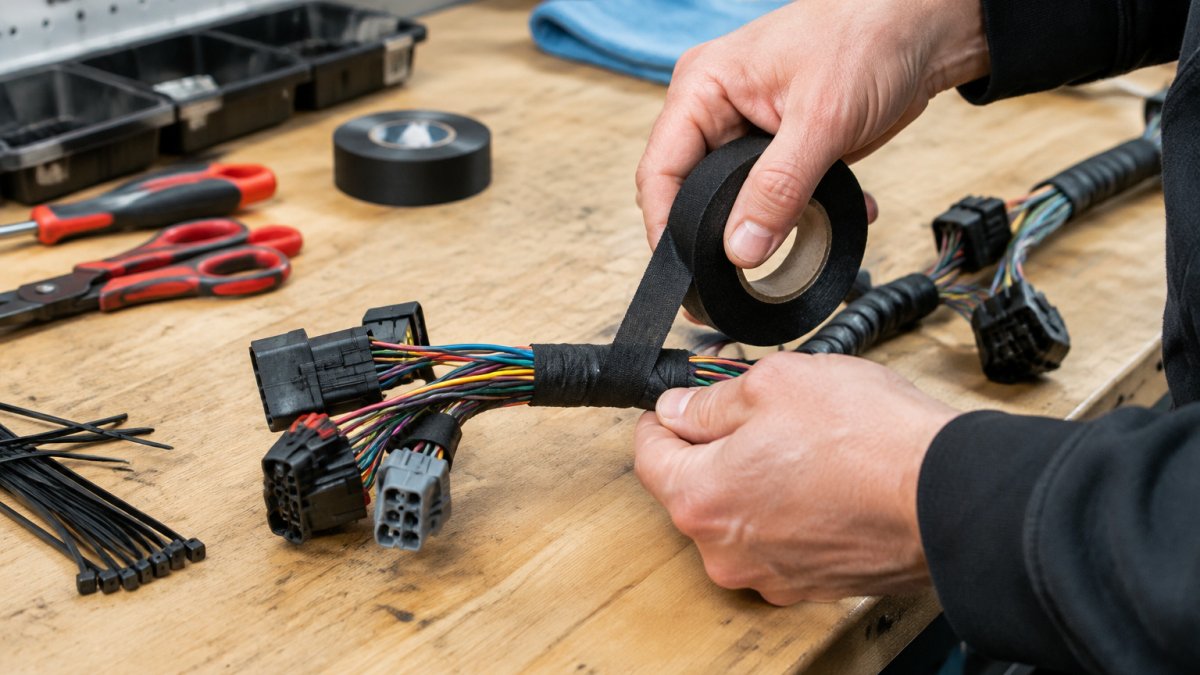
- Prepare the bundle. Group the wires and check each one is routed where it should go before wrapping.
- Start the wrap. Secure the first turn firmly and keep the tension even.
- Overlap as you go. Each turn should cover about half the width of the previous one.
- Finish cleanly. Secure the end and trim any loose tail.
Common mistakes include wrapping too loosely, which lets the bundle shift, and overstretching the tape, which makes it creep back later. Check the loom by hand once finished and reposition anything that feels loose.
Choosing Your Tape and Ordering From Just Tape
Start by deciding where the loom runs, then choose the construction and fastening method to suit. For a neat bundle inside the cabin, cloth or fleece usually works well. For under-bonnet or moisture-prone runs, look for the heat rating and choose PET or a suitably rated product. For a removable, residue-free wrap, consider hook-and-loop. If you are weighing up cable management options, our guide on how to mount cable clips without damaging desk surfaces covers the related approach.
If you want to secure a loom without adhesive, our VELCRO® ONE-WRAP Reusable Double-Sided Strapping Tape Hook and Loop is available at £3.95. It can be cut to length and reused. For a stronger bond on clean, flat surfaces, the 3M Hook & Loop Tape with 3M 9448A Adhesive Backing Tape is available from £2.95, though it is not suitable for fabrics or dashboards.


Items are dispatched within 24 hours, and UK orders over £20 qualify for free Royal Mail 48 shipping. Our sourcing service is available for hard-to-find items, and our expert support team is ready for enquiries.
Frequently Asked Questions
What is wire harness tape used for?
Wire harness tape is used to bundle and protect the wires in a wiring loom. It holds cables together, reduces abrasion where wires rub against bodywork, and helps cut down rattling and noise from loose cable runs. It is commonly used in cars, motorsport builds and wiring repairs, and it can be applied in the engine compartment when the chosen tape is rated for the temperatures involved. Products such as the VELCRO ONE WRAP strapping tape at £3.95 are better suited to reusable bundling where you may need to undo the wrap later.
What is the difference between wire harness tape and electrical tape?
Wire harness tape is typically a cloth, fleece or PET-based tape designed for bundling and protecting wiring looms, while electrical tape is usually a thin vinyl tape intended mainly for insulation. Harness tapes tend to offer better abrasion resistance and conform well to multi-wire bundles. Electrical tape can soften or unwind in hot conditions, so it is not the first choice for wrapping a loom in an engine bay. Check each product's listing for its stated temperature and material details before choosing.
Can cloth wiring tape be used in an engine bay?
Only use a wiring tape in an engine bay where the specific product is rated for the operating temperatures and conditions. Always check the manufacturer's stated temperature range and keep the tape away from exhaust components and hot surfaces. Our range includes adhesive hook and loop products such as the 3M Hook & Loop Tape at £2.95, which are recommended for smooth surfaces and indoor or outdoor use rather than fabrics, dashboards or flexible vinyl.
Does wire harness tape reduce rattling and noise?
Wrapping a loom tightly and securing it at regular intervals reduces movement between cables and the surfaces they touch, which is the main way harness tape limits rattling. Bundling also keeps wires from slapping against panels. Hook and loop straps such as the VELCRO ONE-WRAP Ties at £5.95 allow you to fix bundles in place and adjust them later, while a firm wrap of harness tape gives a more permanent, low-movement finish.
