

High Strength Mounting Tapes for Plastic: A 2026 Guide
Table of Contents
- Why High Strength Mounting Tapes Matter for Plastic Surfaces
- 3M VHB Tape for Plastic: The Industry Standard
- How to Apply Mounting Tape to Plastic Correctly
- Understanding Mounting Tape Weight Capacity
- Choosing the Right Tape Format: Rolls vs Pads vs Foam
- Removing Double-Sided Tape from Plastic Without Damage
- Common Mistakes to Avoid When Using Mounting Tape on Plastic
- Frequently Asked Questions
Last Updated: October 21, 2026
Why High Strength Mounting Tapes Matter for Plastic Surfaces
Plastic surfaces present a unique challenge for adhesives. Unlike metal or wood, plastic is non-porous, often smooth, and prone to movement, which means mounting tapes for plastic need to work harder to create a lasting bond. At Just Tape, we understand that choosing the right tape isn't just about strength; it's about finding a solution that actually sticks to plastic without causing damage or leaving residue behind.
The reason high-strength mounting tapes matter is straightforward: a weak bond fails quietly, leaving your project unsecured. A poorly chosen tape can damage the plastic surface itself, leaving marks or gouges that ruin the finish. The best mounting tapes for plastic combine genuine adhesive strength with the flexibility to move slightly as plastic expands and contracts with temperature changes.
Most DIY attempts fail because people grab whatever tape is nearby. Industrial applications demand precision. Whether you're mounting signage, securing trim, or fastening components in manufacturing, the tape you choose determines whether your project lasts months or years. This guide covers the high-strength options that actually deliver, how to apply them correctly, and the mistakes that compromise even the best tape.
3M VHB Tape for Plastic: The Industry Standard
When professionals need high-strength mounting tape for plastic, 3M VHB is the benchmark they measure everything against. This isn't marketing, it's what happens when you combine acrylic adhesive chemistry with foam backing designed specifically for plastic surfaces.

The 3M VHB product range uses a high-performance acrylic adhesive that bonds to plastic through pressure and time rather than through surface porosity. This matters because plastic doesn't absorb adhesive the way porous materials do. Instead, the tape's foam layer compresses, creating micro-contact points that lock onto the plastic surface.
Just Tape stocks the 3M VHB DOUBLE SIDED SELF ADHESIVE TAPE ROLLS - Grey or Clear at £5.95 per 3-metre roll. These rolls come in multiple widths and colours, giving you flexibility for both visible and hidden applications.
What sets 3M VHB apart for plastic is the bond development timeline. After application, you'll achieve roughly 50% bond strength within 20-30 minutes at room temperature, 90% after 24 hours, and full strength after 48-72 hours.
The tape works on smooth plastic surfaces, the kind you encounter most often in real applications. Textured or rough plastic requires different considerations, which is why understanding your surface matters before selecting your tape.
How to Apply Mounting Tape to Plastic Correctly
Surface Preparation Steps
Surface preparation determines whether your tape holds or fails. Most people skip this step and then blame the tape when it peels away.
Start by cleaning the plastic surface thoroughly. Use warm soapy water or a mild degreaser to remove dust, oils, and residue. Plastic collects fingerprints and environmental grime that interfere with adhesion. Dry the surface completely, moisture is the enemy of strong bonds.
Inspect the plastic for damage or deterioration. Cracked, brittle, or UV-damaged plastic won't hold any tape reliably. If the plastic is degraded, no mounting tape will fix the underlying problem. For new or well-maintained plastic, proceed to the next stage.
If the plastic surface is glossy or slippery, lightly sand it with fine-grit sandpaper (220-grit or higher). You're not trying to roughen it dramatically, just break the gloss enough to give the adhesive something to grip. Wipe away all dust with a damp cloth and let it dry completely.
Check the temperature. Most mounting tapes perform best when applied between 15°C and 25°C. Cold plastic is harder for adhesive to bond to; heat can soften some plastics. If your environment is outside this range, wait for conditions to improve if possible.
Application Process for Maximum Bond Strength
Once your surface is prepared, the application process is straightforward but requires care.
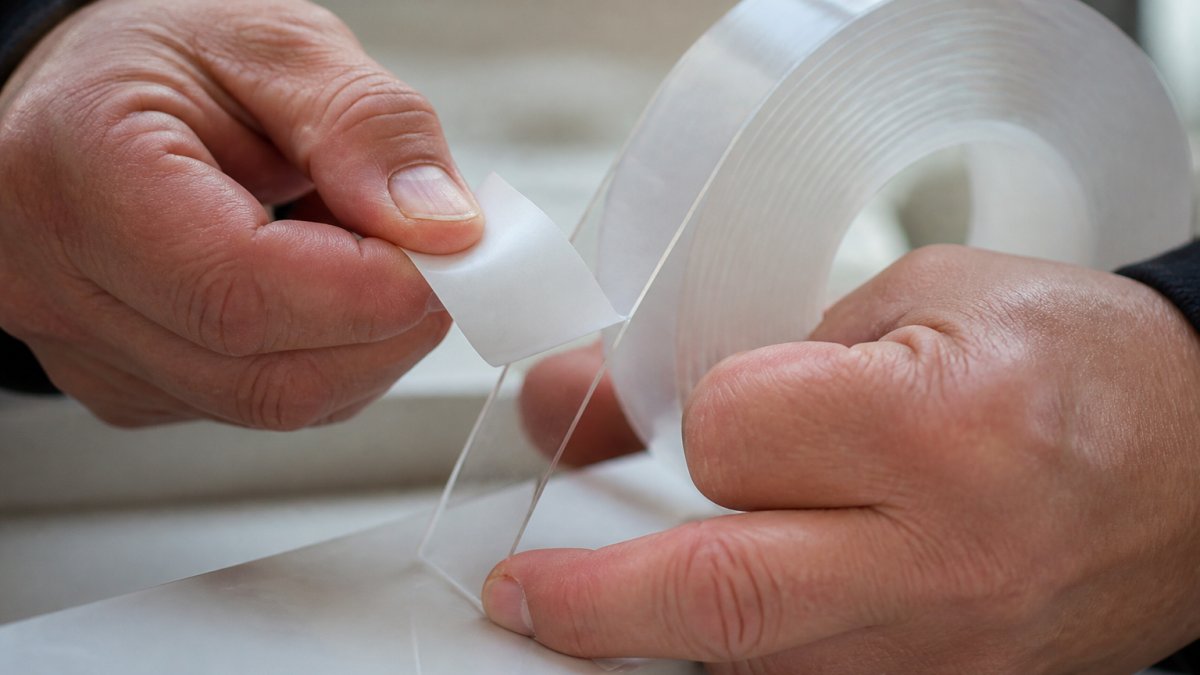
Cut your tape to length if using rolls. For pads, remove them from the sheet one at a time. Peel back one side of the protective backing, this reveals the adhesive. Position the tape on the plastic surface, pressing firmly as you go.
After positioning, leave the second protective backing in place for at least 15 minutes before removing it. This gives the initial bond time to set. Then peel away the second backing and position whatever you're mounting, a sign, bracket, trim, or component.
Here's the critical part: apply firm, even pressure for at least 30 seconds. Don't just press and move on. The adhesive needs time and pressure to flow onto the plastic surface properly. If you're mounting something heavy, consider applying pressure for a full minute.
After application, resist the urge to stress the bond immediately. Wait at least 20-30 minutes before hanging anything that relies on the tape's strength. Better yet, wait 24 hours if your timeline allows.
Temperature matters during curing. Avoid applying the tape in cold conditions and then immediately exposing it to heat, or vice versa. Let the tape reach equilibrium with its environment before stressing the bond.
Understanding Mounting Tape Weight Capacity
Weight capacity is where people often misunderstand what a tape can actually do. The weight a mounting tape can hold depends on several factors working together: the tape's adhesive strength, the surface area of contact, the type of plastic, and how the weight is distributed.
Most high-strength mounting tapes are rated by their shear strength, how much force they can resist when pulled parallel to the surface. This is different from peel strength, which measures resistance to pulling at an angle.
A general rule: the larger the contact area, the more weight the tape can support. A small 25mm pad can hold a few kilograms on rigid plastic. Double that contact area, and you roughly double the weight capacity.
The type of plastic affects capacity too. Hard, rigid plastics like acrylic or polycarbonate hold better than flexible plastics. Thin plastic that can flex or bend will fail sooner than thick, structural plastic, even with the same tape.
3M VHB DOUBLE SIDED SELF ADHESIVE TAPE ROLLS - Grey or Clear →
If weight capacity is critical to your application, test the bond before committing. Apply your tape to a sample piece of the same plastic, wait the full 48-72 hours for curing, then apply your expected load. This real-world test beats guessing.
Choosing the Right Tape Format: Rolls vs Pads vs Foam
Just Tape stocks multiple formats of high-strength mounting tape, each suited to different applications. Understanding the differences helps you choose correctly the first time.
Rolls offer flexibility and economy. The 3M VHB DOUBLE SIDED SELF ADHESIVE TAPE ROLLS at £5.95 per 3-metre roll let you cut custom lengths for any project. Rolls work best when you need continuous adhesion along a line, mounting trim, securing cable runs, or fastening panels.
Pre-cut pads provide speed and consistency. The 3M Double Sided Sticky Pads - GREY and 3M Double Sided Sticky Pads - CLEAR at £3.95 each are ready to use immediately. Pads are ideal for mounting discrete items, small signs, brackets, or components.


Foam pads add cushioning and flexibility. The 3M FOAM Double Sided Adhesive Sticky Pads at £5.95 include 3mm-thick foam that absorbs minor vibration and accommodates slight surface irregularities. Foam pads are particularly valuable for plastic because they flex slightly as the plastic expands and contracts with temperature.
| Format | Best For | Price | Flexibility |
|---|---|---|---|
| Rolls | Continuous adhesion, custom lengths | £5.95 per 3m | High, cut to any size |
| Standard Pads | Discrete items, quick application | £3.95 per pack | Medium, fixed sizes |
| Foam Pads | Vibration absorption, uneven surfaces | £5.95 per pack | High, flexes with plastic |
The choice comes down to your specific application. If you're mounting a single item, pads are faster and cheaper. If you're running a continuous line or need custom sizing, rolls make sense. If vibration or flexibility matters, foam is worth the extra cost.
Removing Double-Sided Tape from Plastic Without Damage
Eventually, you'll need to remove a mounted item. The trick is removing the mounting tape without damaging the plastic surface underneath.
Heat is your primary tool. Warm the tape gently with a heat gun or hair dryer set to low heat, held at least 15 centimetres away from the plastic. The warmth softens the adhesive, making it more pliable. Work around the entire edge of the tape, heating evenly.
Once warmed, gently peel the tape away at a shallow angle, aim for an angle close to the plastic surface rather than pulling straight up. Shallow-angle pulling distributes force more evenly and reduces the risk of tearing the plastic or leaving adhesive residue.
If the tape resists, apply more heat and wait longer. Patience prevents damage. Pulling hard on cold tape risks tearing the plastic or leaving chunks of adhesive behind.
Once the tape is removed, any remaining adhesive can be cleaned with a plastic-safe solvent. Isopropyl alcohol works well on most plastics. Apply it sparingly, let it soak for a minute, then gently rub away the residue with a soft cloth. Test on an inconspicuous area first if you're unsure how the plastic will react.
Common Mistakes to Avoid When Using Mounting Tape on Plastic
Understanding what goes wrong helps you avoid the pitfalls that derail otherwise good projects.
Skipping surface preparation is the most common mistake. Dust, oil, or residue on the plastic surface creates a barrier between the adhesive and the plastic.
Applying tape in cold conditions undermines bond strength. Adhesive flows more slowly at low temperatures, and plastic itself becomes less receptive to bonding. If you must apply tape below 15°C, let it cure for significantly longer than the standard 48-72 hours.
Loading the bond too quickly is another frequent error. Tape reaches only 50% strength in the first 30 minutes. If you hang a heavy item immediately after application, you're asking a half-strength bond to do a full-strength job. Patience during curing prevents failure later.
Using the wrong tape format for the job leads to disappointment. Pads work for discrete items; rolls work for continuous runs.
Ignoring plastic type and condition causes preventable failures. Brittle, UV-damaged, or thin plastic won't hold even the best tape. Flexible plastic needs foam pads rather than rigid pads. Knowing your surface before choosing your tape prevents wasted money and effort.
Choosing the right mounting tape for plastic means understanding what makes plastic different from other surfaces, selecting a tape designed for those differences, and applying it with care.
Just Tape supplies genuine 3M mounting tapes in rolls, pads, and foam formats, everything you need to mount securely to plastic surfaces. Whether you're a procurement manager sourcing for manufacturing, an IT technician managing data centre infrastructure, or a homeowner tackling a renovation, we stock the high-strength mounting tapes that deliver. Contact us for bulk orders, hard-to-find items, or expert advice on selecting the right tape for your specific application.
Frequently Asked Questions
Does 3M VHB tape stick to plastic?
Yes. 3M VHB tape adheres strongly to plastic surfaces, including smooth plastics commonly found in electronics, automotive trim, and household items. The tape reaches approximately 50% of its full bond strength within 20-30 minutes at room temperature, 90% after 24 hours, and 100% after 48-72 hours. Proper surface preparation, cleaning with surgical spirit and allowing it to dry completely, ensures the best adhesion on plastic.
What is the strongest double-sided tape for plastic?
3M VHB double-sided tape is among the strongest options available for plastic. The 3M VHB Double Sided Self Adhesive Tape Rolls (from £5.95) deliver high-performance acrylic adhesive that bonds reliably to smooth plastic surfaces. For heavier applications, 3M Foam Double Sided Adhesive Sticky Pads (£5.95) offer added thickness and cushioning, making them ideal when you need superior holding power combined with vibration reduction.
How long does mounting tape take to reach full strength?
Mounting tape strength develops in stages. At room temperature, you'll achieve approximately 50% bond strength after 20-30 minutes, allowing you to position items quickly. The tape reaches 90% strength after 24 hours, which is sufficient for most applications. However, for maximum reliability, especially on plastic or when supporting weight, allow 48-72 hours for the adhesive to fully cure and reach 100% bond strength.
Will mounting tape damage plastic when removed?
When removed correctly, quality mounting tape like 3M VHB should not damage plastic. To remove without harm, gently heat the tape with a hairdryer to soften the adhesive, then peel slowly at a shallow angle. Avoid pulling sharply or at right angles to the surface. If residue remains, warm it again and gently rub with your thumb. Always test on an inconspicuous area first, especially on delicate or painted plastic surfaces.