

7 Steps to Remove Industrial Adhesive From Metal
Last Updated: October 25, 2026
Quick Summary
To remove industrial adhesive from metal, soften the bond first with heat from a heat gun on a low setting, then lift it gently with a plastic scraper. For hard cured bonds, apply acetone or a specialist remover matched to the adhesive type and allow the full dwell time before scraping. Always test any solvent on a hidden area first.
- Wipe uncured adhesive immediately with IPA, working from the edge inward so you do not spread it.
- Keep the heat gun moving constantly to avoid warping thin metal panels.
- Use plastic scrapers first and metal blades only as a last resort.
- On brushed stainless steel, wipe along the grain, never across it.
- Just Tape offers free Royal Mail 48 delivery on orders over £20, dispatched within 24 hours.
Table of Contents
- What You'll Need Before You Start
- How to Remove Uncured Industrial Adhesive
- How to Remove Cured Adhesive From Metal
- Choosing an Industrial Adhesive Remover for Metal
- How to Remove Adhesive Residue From Stainless Steel
- Common Mistakes That Damage Metal Surfaces
- Ordering the Right Removal Supplies From Just Tape
- Frequently Asked Questions
What You'll Need Before You Start
Removing industrial adhesive from metal starts with the right kit, not brute force. The fix is preparation.
Industrial adhesive is any high-strength bonding agent made for load-bearing or permanent joints. That includes epoxy, structural acrylics, polyurethane, and pressure-sensitive tapes. Each one needs a different removal method.
Here is what to gather before you touch the metal:
- Safety glasses to keep solvent splash and flakes out of your eyes
- Nitrile gloves (not latex) for solvent work
- A heat gun or hairdryer for softening cured bonds
- Plastic scrapers to lift adhesive without gouging
- Isopropyl alcohol (IPA) for residue clean-up
- A solvent-matched remover for your adhesive type
- Lint-free cloths and a small wire brush for textured metal
Safety Gear and Ventilation
Solvents release fumes (Construction hazardous substances: Solvents). Work in a well-ventilated space, ideally with a door or window open and a fan pushing air away from you. Wear nitrile gloves and safety glasses throughout.
Keep solvent-soaked cloths in a metal container, not a bin. Most adhesive removers are flammable, so keep them away from naked flames and pilot lights.
The Health and Safety Executive guidance on solvents sets out the ventilation and skin-protection basics worth following for any solvent-based product.
Tools and Solvents by Adhesive Type
The right solvent depends on what you are removing. Using the wrong one wastes time and can stain the metal.
| Adhesive Type | Best First Approach | Solvent | Watch Out For |
|---|---|---|---|
| Pressure-sensitive tape | Peel and warm | IPA or citrus remover | Residue left on brushed finishes |
| Uncured epoxy or acrylic | Wipe immediately | IPA or acetone | Spreading the mess further |
| Cured epoxy | Heat plus mechanical lift | Acetone or specialist epoxy remover | Acetone attacks some paints |
| Polyurethane adhesive | Heat and scrape | PU-specific remover | Slow softening time |
| Cyanoacrylate (superglue) | Soak and soften | Acetone | Fumes in enclosed spaces |
Buy the remover matched to your adhesive, not the other way round. If you are unsure which adhesive you are dealing with, start with the mildest option and work up.
How to Remove Uncured Industrial Adhesive
Uncured adhesive is the easy win. Remove it immediately with a cloth dampened in IPA, wiping from the outside of the spill inward so you do not spread it. Work in small sections and swap cloths often.
The clock matters here. Once a structural adhesive starts to set, you lose the simple wipe-and-go option and move into the harder methods below.
Steps for uncured adhesive:
- Put on gloves and glasses.
- Blot, do not wipe, to lift the bulk of the adhesive.
- Dampen a lint-free cloth with IPA.
- Wipe from the edge inward in one direction.
- Repeat with a clean cloth until no tack remains.
- Finish with a dry cloth and inspect under good light.
Watch out: wiping outward on a fresh spill pushes adhesive into seams and screw holes, where it sets hard and becomes far harder to reach. Always pull the mess toward the centre.
How to Remove Cured Adhesive From Metal
Cured adhesive needs patience and a two-stage approach: soften it, then lift it. Trying to chip a hard bond off cold metal is how surfaces get scratched.
Heat and Mechanical Methods
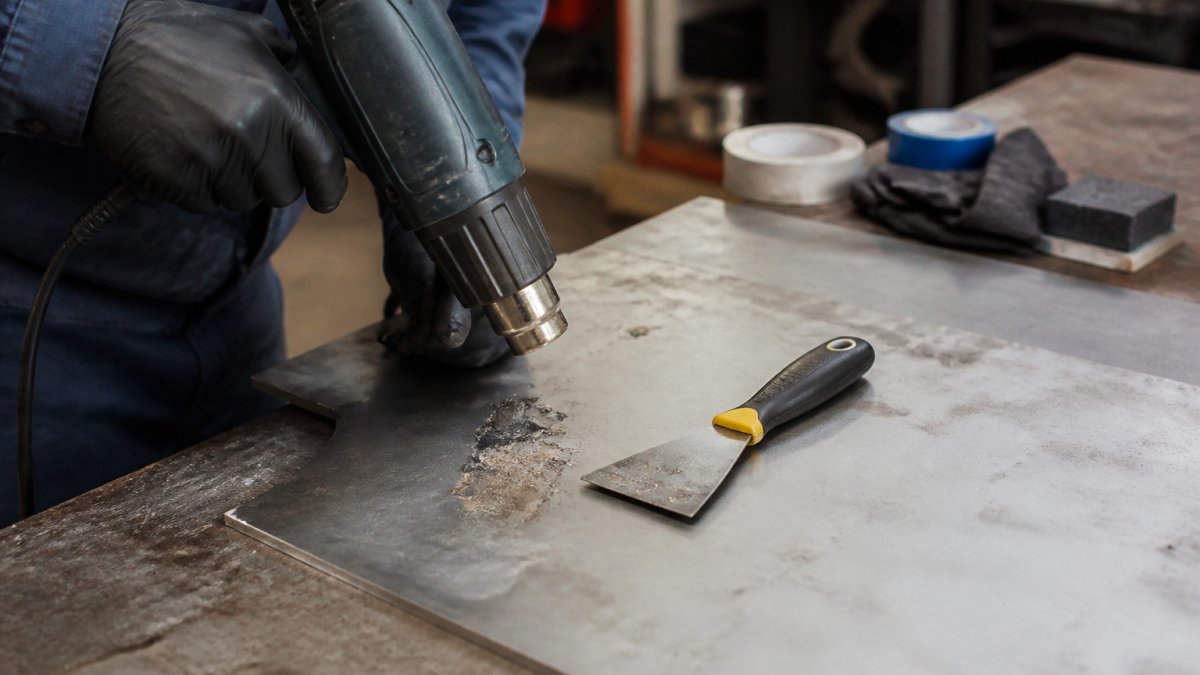
Heat is your first move on most cured bonds. Warm the adhesive with a heat gun on a low setting, keeping the nozzle moving so you do not overheat one spot.
Once the adhesive softens, slide a plastic scraper under the edge and lift gently. Work along the bond line rather than digging straight down. For thicker beads, a wooden or plastic wedge helps lever the bond apart without marking the metal.
Keep these points in mind:
- Move the heat gun constantly to avoid warping thin panels
- Use plastic scrapers first; metal blades only as a last resort
- Let the metal cool before switching to solvent
- Brush loosened flakes away with a soft brush, not your fingers
Chemical Softening for Hard Cured Bonds
When heat alone will not shift it, a chemical remover does the heavy lifting. Apply the solvent to the adhesive, not the whole panel, and give it the dwell time the label states.
For cured epoxy and structural acrylics, acetone or a specialist epoxy remover works well. Soak a cloth, press it onto the bond, and leave it to soften. Reapply as needed.
A common mistake is rushing the dwell time. Solvents need minutes, not seconds, to break a cured bond. Let the chemistry work, then lift with a plastic scraper.
Choosing an Industrial Adhesive Remover for Metal
Pick the remover by adhesive chemistry and metal finish, not by price. An industrial adhesive remover for metal should soften the bond without attacking the surface underneath.
Use this decision guide:
- Bare or brushed steel: IPA first, then acetone for stubborn spots
- Painted or coated metal: start with a citrus-based remover to protect the coating
- Polished or anodised surfaces: avoid abrasive pads; use solvent and soft cloth only
- Unknown adhesive: test a small hidden patch before full application
If you are working with branded tape bonds, knowing the exact adhesive family helps.
Always test any solvent on a hidden area first. A remover that works perfectly on one alloy can dull or stain another.
How to Remove Adhesive Residue From Stainless Steel
Stainless steel hides adhesive well, then shows every smear under light. The goal is to lift residue without leaving swirl marks or dulling the brushed grain.
Work along the grain, never across it. Dampen a lint-free cloth with IPA and wipe in straight lines following the finish direction. For sticky patches, let the solvent sit for a minute before wiping.
Follow these steps for a clean finish:
- Remove the bulk of the adhesive first with heat and a plastic scraper
- Wipe with IPA along the grain direction
- Use a citrus remover for any remaining tack
- Rinse with clean water and dry immediately to avoid water marks
- Buff with a dry microfibre cloth
Avoid steel wool and abrasive pads on stainless steel. They leave scratches that trap dirt and are almost impossible to polish out by hand.
Common Mistakes That Damage Metal Surfaces
Most surface damage comes from impatience, not the adhesive itself. Here are the errors we see most often, and how to avoid them.
- Skipping the test patch. Always try solvent on a hidden area first.
- Using metal scrapers on soft alloys. Plastic scrapers prevent gouges.
- Overheating thin panels. Keep the heat gun moving and never hold it still.
- Letting solvent dry on the surface. Wipe it off before it evaporates.
- Wiping across the grain on brushed metal. Always follow the finish direction.
- Mixing solvents. Stick to one remover at a time to avoid unpredictable reactions.
A common mistake is assuming stronger solvent means faster results. In practice, matching the solvent to the adhesive saves more time than reaching for the harshest option.
Ordering the Right Removal Supplies From Just Tape
The right supplies make short work of any adhesive removal job. At Just Tape, we stock genuine 3M and VELCRO® Brand tapes and fastening products, with free Royal Mail 48 delivery on orders over £20 and dispatch within 24 hours.
Here is how to get the right kit:
- Trade and bulk buyers: our sourcing service covers hard-to-find items and regular industrial orders
- One-off DIY jobs: no minimum order, so a single roll or remover is fine
- Unsure what you need: our support team helps match the product to your adhesive and surface
We serve both the public and the trade, so whether you are fitting out a data centre or fixing a kitchen splashback, you can source what you need in one place.
Frequently Asked Questions
What dissolves strong adhesive on metal?
Solvent choice depends on the adhesive chemistry. Isopropyl alcohol works on many pressure-sensitive residues, while acetone and dedicated adhesive removers shift tougher acrylic and rubber-based bonds. For cured structural adhesives, a combination of heat softening followed by a solvent wipe is usually more effective than solvent alone. Always test on a hidden area first, and check the manufacturer's safety data sheet before using any solvent on a coated or polished metal surface.
Can you use heat to remove adhesive from metal?
Yes. A heat gun or hairdryer set to a moderate temperature softens most cured adhesives enough to lift them with a plastic scraper. Keep the nozzle moving so the metal heats evenly, and hold it roughly 10 to 15 centimetres away. Avoid overheating thin panels or painted finishes, and never use an open flame. Heat works best on thicker adhesive beads and foam tapes; for thin residue, a solvent wipe afterwards finishes the job.
How do you remove industrial adhesive without damaging a metal finish?
Work from the gentlest method upward. Start with warmth and a plastic scraper rather than a metal blade, then move to isopropyl alcohol, and only use stronger solvents if residue remains. On brushed, anodised or painted metal, avoid abrasive pads and wire wool, which leave visible scratch patterns. Test any industrial adhesive remover for metal on an inconspicuous patch first, and wipe along the grain on brushed finishes to keep the appearance consistent.
How do you remove adhesive residue from stainless steel?
Stainless steel tolerates most solvents well, but it shows smears and scratches easily. Soften the residue with a cloth soaked in isopropyl alcohol or a dedicated remover, let it sit for a minute, then wipe in the direction of the brushed grain. Avoid steel wool and scouring pads. Finish with a clean damp cloth and dry immediately to prevent water marks, especially on brushed or mirror-polished panels.
Removing industrial adhesive from metal comes down to matching your method to the adhesive and treating the surface with care. If you would rather not guess, Just Tape can help you get it right first time. We offer genuine branded tapes, a sourcing service for hard-to-find items, and free Royal Mail 48 shipping on orders over £20. Get started with Just Tape and remove adhesive cleanly without damaging your metal.
